Showing posts with label Interviews. Show all posts

Wednesday, 13 March 2019

Interview for the STEM career panel at The Big Bang Fair


Meet the future you
STEM careers panel


  1. What’s the most exciting or rewarding project you’ve been part of in the last year?
I would have to say the ‘Women in Innovation’ funding competition. I was involved with running this competition for Innovate UK and I read hundreds of applications from incredibly innovative women. Attending the final stage interviews and meeting the most innovative women in their respective sectors was humbling. These women came from a diverse background and in many cases overcame huge challenges to reach success, and I found myself inspired by their stories and amazing innovations.


  1. How does what you do change people’s lives?
I currently work at the Biotechnology and Biological Sciences Research Council (BBSRC) and my role means I help fund innovative solutions to global challenges, such as feeding a growing population, or addressing the health challenges of an aging population. One exciting project was Worms in Space, which involved worms traveling to the international space station so we can study the molecular cause of neuromuscular decline which occurs during spaceflight, but is also relevant to human aging. This research could lead to revolutionary new treatments and healthier lives for our aging population, as well as allow us to travel to other planets.


  1. What’s the coolest bit of equipment you’ve used?
I used a next-generation genome sequencer robot, which is a machine which can sequence your DNA. I sequenced the DNA of a large group of people who had either pancreatic or ovarian cancer, then developed an algorithm to identify unique mutations and link these to the patients’ outcomes and responses to different drugs or treatments. This could eventually be used by doctors, who could sequence a new patient and look at the specific mutations they have and know which treatments are likely to be effective. Being able to sequence a genome within a few hours is an incredible scientific achievement which would have been unthinkable a few decades ago.


  1. What did you enjoy most at school/college?
At university I loved the freedom to choose the classes which interested me, so I took extra classes in virology and parasitology, as well as a class in Chinese. I loved being in an environment where I could study anything I wanted, and my tutors were very supportive and helped feed my curiosity. I also took advantage of the global university network to study abroad for a year in California. This allowed me to take classes which were not offered by my home university. Studying abroad was amazing and I would highly recommend it, as it helped me build a global network and become more adaptable to new ways of thinking and working.


  1. Why/how did you decide to become a scientist or engineer?
It was during my A-levels that I fell in love with genetics, as it was a way to understand the biological world around us, that there was a reason why some people can roll their tongue as others can’t, and the secrets were in our DNA. This discovery changed everything for me and that was the moment I realised I wanted to become a scientist.


  1. How do you think your job or industry will change the world in the future?
At the BBSRC we fund research to address the global challenges facing our planet. I think in the next decade we are going to see some rapid changes in the agriculture and food industries as the world adapts to a growing population and seeks to make food production more sustainable. Genome engineering is currently taking off, so I would expect this to play a large role in plant and animal breeding in the future. I also think there will be increasing research into alternatives to fossil fuels and ways to remove carbon from the atmosphere and plastics from the ocean.


  1. What is the funniest thing that has ever happened to you at work?
I used to work for Addgene, which is based in Boston, USA. Every year I would travel to Boston for some annual meetings and teambuilding, and normally this would coincide with Halloween. Over the years there were some amazing team costumes, but the one which really stands out was when my colleague’s team chose the theme of ‘A Christmas Story’, and he dressed as the leg lamp, wearing a giant lampshade as a dress. I seriously thought I would die laughing. There was an amazing group of people at Addgene and working there was so much fun.  


  1. Is there anything you wish you’d known when you were still at school?
I think I didn’t appreciate how the scientists we see in the media got to their positions, because from an outsider’s perspective it appears that they took a direct career path to their current job. We overlook and oversimplify the failures and career changes everyone experiences because no-one talks about them, and it’s easier to assume it’s because they were a genius. I would tell my past self that it is OK to try something and fail, to be ambitious and apply for courses and jobs which I don’t think I will get, because as the famous quote says “Shoot for the moon. Even if you miss, you'll land among the stars”. I have applied for dozens of jobs where I was not totally qualified and I still got offered the position or took a subject I thought I would fail and found I excelled at it, so I have learnt that the only thing holding me back was myself.


  1. What is the most important tip or piece of advice you can offer our visitors today?
I would encourage you to talk to the scientists and get involved with the workshops, we are all very friendly and would love to talk to you and answer your questions. This event is an opportunity for you to interact with scientists, find out what their job is like and ask any questions you might have, so don’t be shy!

Share:

Sunday, 3 March 2019

Interview about mentoring for Science Sophie


I have been mentoring students about science careers for a number of years, and Science Sophie requested an interview about my experiences and some advice for students starting out in science


What made you become a science mentor?

Several years ago I was asked to give advice to a friend’s daughter who was doing her A-levels and wanted to discuss potential careers in science. Since then I have been approached several times to advise about science careers and how I became a scientist, and so I began actively seeking out opportunities to mentor students, as it was clear that there was a demand for mentoring. Since then there has been a huge increase in the support available, through organisations like www.skypeascientist.com, stemettes.org and the government initiative STEM Ambassadors www.stem.org.uk


Did you have any mentors when you were a student?

No, unfortunately I never had any mentors growing up, and so knew very little about science careers other than what you see on TV. None of my family went to university and I didn’t know anyone who worked in science, so I honestly had no-one I could ask about science careers or even how to apply to university. I asked my science teacher about careers but they couldn’t really help, as they went straight from university into teaching. At times I felt pretty lost, and I think a mentor could have really helped me, as there was lots of thing I had not considered and opportunities I didn’t know about that I missed out on.


What do you think are the benefits of having a mentor?

I think having a mentor can be really valuable, as you can ask them for expert advice about the sector or industry you are interested in, this means you can avoid some of the common mistakes and pitfalls when applying. Mentors are also beneficial because they are someone outside of your circle of family and friends, and so they can provide impartial advice and you can have an honest discussions about careers which you might not be able to with your parents for example. Mentors can also give advice on where you can apply for work experience and summer placements, as well as suggest prospective shadowing opportunities. I think mentoring is particularly useful to women, because we can sometimes be more risk-adverse, and so it can really help to have someone supporting and advising you, giving you the confidence and ambition to apply for your desired course or role.


Do you think mentoring will help equalise the current gender imbalance in some STEM subjects?

I think mentoring can contribute towards increasing both diversity and gender equality within STEM. The issue of the gender imbalance is a complex problem with multiple factors, but I do think mentoring and support mechanisms will meaningfully contribute towards change, but it needs to be part of multiple initiatives and interventions if we are to achieve complete equality.


How can students find their own mentor?

I would recommend that you think about what you are looking for, is it just support for one thing, like writing your personal statement or deciding which course to study or are you looking for ongoing weekly mentoring? Are you looking for a scientist you can meet and shadow just for one day or just email and find out what their job is like? Do you want to speak with someone with a specific role, such as a medical doctor, or would someone working in any field of science be able to help you? Also, how do you want to meet with the person? By phone, email, Skype or in person? These types of questions will help identify suitable mentors, because if you want in-person weekly meetings you need to consider the mentor’s location and availability.

Once you have thought about what you are looking for, you can then find relevant mentors in a variety of ways, including asking your teachers, contacting STEM ambassadors, Skype a Scientist, Stemettes, or your local university. Also, don’t be afraid to look for another mentor if you are not finding the support you need, because every mentor will have different strengths and can help you in different ways.


What advice do you have for someone trying to deciding what A-levels to take?

Firstly, think about the subjects you enjoy at school and what career you might like, you can then look at the university courses which would lead to your desired career and the common A-level subjects they require and the minimum grades you will need. This will help you chose the right A-levels to ensure you can be accepted to the university course you want.


What advice do you have for someone studying A-levels and thinking about university?

If you are considering going to university but don’t know where to begin, there are a few things which can help. I would recommend visiting a few university campuses and meet the staff, this will give you an idea of what university life is like, as it is very different from school. If you have a talent or sport you play then consider universities which excel in this, as this will add to your university experience and many universities will offer scholarships in sports (my university offered a golf scholarship!). It is also important to consider if you want to be close to home so you can visit family or if you want to live in a big city or study abroad.

If you are applying to a very competitive course or university then think about relevant volunteering or shadowing experience which might make you stand out in your personal statement. This is especially relevant if you are considering studying medicine, as universities want to see a long-term dedication and passion for science, so volunteering with St John’s Ambulance for example would make you stand out. Summer independent research projects are also a great way to stand out and would be a great topic to discuss in university entrance interviews.


What other ways can students get career advice?

Luckily there is lots of ways you can get career advice, including from you teachers, career advisors, and your school librarian. The best career advice recourses can probably be found online, because they collate a huge range of expert advice and career options in one place, and so I would recommend checking out good websites like https://www.prospects.ac.uk/


What have you learnt since becoming a mentor?

I feel I’m always learning, but particularly when I’m mentoring I find I keep learning a lot about myself. I try and focus on giving my mentee options to think about and questions to prompt them, rather than telling them what they should do. My role is to help guide and support the person, and let them make their own informed decisions. Sometimes this is hard, particularly when they are having a challenging time or struggling with exams or life, but I always remind myself that my job is to help them learn and grow and not to solve their problems for them. As with a lot of volunteering, I find that when I give my time I receive so much in return. With mentoring it is especially true, because you feel part of the person’s success and can celebrate their achievements.


Share:

Tuesday, 19 February 2019

Interview for Geeky Girl Reality


1. Introduce yourself, who are you what do you do? 

I’m Emma, I currently work at the Biotechnology and Biological Sciences Research Council (BBSRC) where I help fund new innovations in biology, support scientists to find partners in industry and commercialise their research. Some exciting projects we have funded include Super Broccoli, which could help reduce the risk of cancer and heart disease and the Gribble, which is a small crustacean which can turn waste wood into renewable biofuel and reduce our dependence on fossil fuels.


 2. How did you arrive at this career (or point in your life/work)? 

Was it always something you knew you wanted to do? I didn’t always know I wanted to be a scientist. I trained as a tailor after leaving school at 16, but unfortunately couldn’t find a job, so I returned to school to take my A-levels in the hopes of eventually becoming a manager in a shop. I initially studied biology, where something just clicked and I fell in love with genetics. I went on to study genetics at university and then worked in a range of STEM roles; everything from clinical trials to develop new treatments for the flu, to helping develop algorithms which look at a patient’s cancer genome to identify the most effective treatments. One of my favourite roles was at a start-up non-profit DNA repository, which acts as a central place for scientists to share genetic materials with other researchers around the world. My role involved managing the logistics of shipping biological materials in Europe, assisting in problem-solving researcher’s experiments, and traveling to visit scientists and collect samples around the world. It was wonderful to be part of a small organisation where I could learn lots of new skills and felt I was making an impact. In contrast to this, I have also worked in large organisations, where I was one of a group of scientists responsible for processing samples and carrying out biological tests. The work is very structured and scheduled, working from a standard protocol in cutting edge labs to process a large volume of samples, so there is a wide range of roles in STEM to suit different people. I have been lucky enough to work in Australia, America and around the UK, as STEM gives you skills which are in high-demand globally.


3. What about your job makes you jump out of bed in the morning, especially on those cold, dark mornings? 

 Personally, my motivation and fulfilment comes from helping others. I feel great satisfaction from being able to help someone with a problem; I enjoy speaking to other scientists, recommending available funding and support, learning about their research and promoting their scientific discoveries. I also feel job satisfaction when I’m able to make improvements in a process and have a lasting impact, as it is important to me to feel I’m making a difference and that my work matters.


 4. What do you do outside of work? Hobbies or interests? 

 I have a variety of hobbies and activities I do outside of work, as maintaining a good work-life balance is important. I enjoy pottery and still do some tailoring. I’m a collector of random skills and hobbies at the moment, most recently having learned how to solve a Rubik’s cube. I love volunteering for science festivals and running science workshops for kids. I also enjoy speaking on panels representing women in STEM, and promoting scientific careers to young women through visits to local schools and mentoring students.


 5. Who is your role model? 

If no one, any thoughts on this? I didn’t have any STEM role models or mentors growing up, as none of my family went to university and I didn’t know any scientists, so determining a career path was more difficult. I tried out a lot of different STEM roles to find a good fit. I really wish I had a mentor who could have helped me explore career options and the opportunities available, as this could have made this process easier. I think that’s why I’m always happy to mentor young people who want guidance about careers in STEM, because it’s so valuable to have access to guidance and support from someone who has relevant experience and works in the career you are interested in.


 6. What advice would you give to yourself if you could go back in time?

 I wasn’t very academic at school, so I never imagined becoming a scientist. I honestly believed that you needed to be a genius to study at university, because I never knew anyone with a degree. I wish I could go back and tell my younger self that you just need to find a topic you are interested in and work hard at it and you will find success. Grades are important but they are not everything, especially when you start working, as skills and work experience are just as valuable. I also wish I had learned more outside of school or from other sources like online or books, because at school my enjoyment of a subject was heavily influenced by the teacher and their teaching style, and at the time I didn’t realise there was other ways to learn. I now read lots of non-fiction books about a wide range of topics in science, I just wish I had discovered them sooner!


7. Top tips for girls starting out in STEM? 

I would recommend anyone starting out in STEM to just ignore the haters and negative people and just do what you love. Don’t be scared to change courses or jobs if it’s not a good fit, it’s not a failure as you always learn something from every role you try. People don’t tell you that you will get dozens of rejections before you receive an acceptance, and it can really knock your confidence, so stay positive. Don’t be put off applying for jobs if you’re not 100% qualified, and don’t be scared to ask for a promotion and recognition for your achievements.


 8. How do you measure your success? 

I think success means different things to different people. Success for me is when I’m able to use my problem-solving skills to overcome a challenge, stretch my abilities, learn something new and push myself to achieve something. Hopefully, my work will help other people or make a lasting difference.


9. Where can we find out more about what you do? 

You can find out more about BBSRC and UK Research and Innovation here: https://www.ukri.org/ I’m very active on Twitter and discuss a wide range of topics in different fields of science, I also post about forgotten women in STEM. I’m very happy to answer questions or provide support to anyone considering a career in STEM, so feel free to contact or follow me on Twitter @GeneticCuckoo.


The original post can be found here: https://www.geekyreality.com/blog/stemstories-emma-researcher-england/
Share:

Thursday, 23 February 2017

Science Career Options

When preparing to graduate from university, many students are confronted with the question ‘what now?’ This is often a hard question to answer if you plan on leaving academia, but don’t quite know what you do want to do or even what careers are available to scientists. It is all too easy to get tunnel vision when working towards a specific goal, and when you realise that your goal might not lead to a career you actually want, you can feel lost. Use this post to explore the wide range of careers available to scientists and open your eyes to the many opportunities available to those who are scientifically minded!

Science Careers Divided by The Most Pertinent Skills Required

  • Research Skills
The ability to think critically and carry out in-depth research is applicable to a wide range of industries and is a highly desirable quality sought after by employers. These skills show employers that you can fully investigate and solve a problem or complete a project, overcoming inevitable failures and setbacks. There are many roles that actively require these skills, including:
Science ReporterScientific SalesEpidemiologist
Scientific RecruitmentMeteorologistResearch and Development
Documentary MakerLab ManagerPatent Lawyer
Science Market ResearchStatisticianHealthcare Consulting
  • Attention to Detail
Patience, accuracy and attention to detail are valuable skills acquired from a science degree that can be applied to many roles. These types of skills show that you fully explore the different options available and then decide on a course of action. Instead of rushing in, you take steps to make it more likely you’ll get your tasks done correctly the first time. These skills are very desirable to employers because they save time and money and make employees more productive. Careers where you’ll actively use these skills include:
Science ReporterScientific IllustratorResearch and Development
Scientific AdvisorLab ManagerPatent Lawyer
Technical WriterMeteorologistJournal Editor
Textile Technologist/Designer  
  • Fieldwork and Traveling
Many people are attracted to science because they enjoy spending time outdoors and with nature. Experience in the field or in a position that requires travel can show that you are self organised, reliable, and can work independently. Practical outdoor skills are needed in a variety of roles, including:
Livestock BreederScientific IllustratorPlant Breeder
Zoological WorkerConservationistDocumentary Director
ParasitologyBotanistNature Photographer/Artist
Ecologist  
  • Computer and Writing Skills
Writing a thesis or dissertation demonstrates that you have advanced writing and formatting skills, which are useful to many employers. Increasingly, computer skills are highly desired, as roles are becoming more reliant on technology, and good computer skills will give you an advantage. Strong writing, computer skills (Word, Excel, PowerPoint etc) or Programming skills (PythonR, SAS, HTMLMatlab etc) are highly desirable in a range of roles, including:
Science ReporterTechnical WriterStatistician
BioinformaticianScience WriterGrant Writer
Journal EditorScience MarketerSoftware Developer


Don't Stumble into a Career, Do Your Research

Once you have identified possible careers, the next step is to research what each of these roles involves on a dad-to-day basis. Often, it is hard to know what a job title actually involves, other than what is portrayed in the media and in films, which can often be misleading. Key aspects to determine are working hours (9am-5pm Mon-Fri or overtime and weekends, part time or full time) and what life is like for someone who currently in the position. Questions you’ll want to find answers to include:
  • Will you be sitting at a desk all day or be on your feet constantly in a lab?
  • Will regular travel be required or will you stay in one location?
  • How long is the commute?
  • Will the job require public speaking?
  • Will you be leading a group or working as part of team?
  • Will you be coordinating projects?
  • Do you need computer programming skills?
Other things to consider are wage, opportunity to advance, and how many jobs are normally available (as sectors such as forensics currently have too many applicants compared to the number of available roles).

Make Your Resume Stand Out

Before you begin to apply for a job, it is useful to search online job websites to see what requirements or qualifications are needed for the role, as this will give you an idea of what additional training you might need to obtain. You'll also need to think of other aspects of yourself that make you stand out. For every role you need to show that you have the relevant skills and experience.You might not normally think about it, but hobbies and volunteer experiences, as well as work history can really show that you have some of the abilities listed above. Showing that you are willing to exercise these skills outside of a formal work environment also shows that you are passionate and capable. For example if the job involves traveling, showing that you are a highly organised and experienced traveler by citing specific examples, may help you get your foot in the door. Match the job's requirements to the content in your Resume and Cover Letter. Include any relevant job specific ‘buzz words’ to ensure recruitment agencies and employers put your resume forward for the role, because it ‘ticks all the boxes’.
Once you’ve assessed your skill set and done your research, it’s time to start sending out applications. 


This blogpost was originally features on Addgene's blog, the original can be viewed here: https://blog.addgene.org/alternative-careers-in-science
Share:

Tuesday, 12 January 2016

Finding Your Perfect Job After University

Being a scientist in my late 20’s, new graduates often ask me for advice on careers available to new science graduates and the pro’s and con’s of working in different sectors. Luckily, I have worked for a variety of different organisations, so I tend to provide them with an overview of my experience and how I felt about the different positions to enable them to decide for themselves.  Here is my experience looking for the perfect job.

Summer Work Experience in Cancer Research

After graduating with a 2:1 BSc in Molecular Biology (roughly a B average in the American system), in 2009 (at the beginning of the financial recession) I knew obtaining work in scientific research would be very competitive, and so I applied for a summer role as a Research Scientist at the Institute of Cancer Research in Sutton, located on the edge of London to gain relevant experience. I applied for this summer position as I felt I needed more practical lab experience to later gain a full time position in a lab. I worked on the genetics of Wilms Tumour, which is a type of pediatric kidney cancer. This was particularly interesting as I had just completed my thesis on the study of e2Fb, which is a tumour suppressor. This summer role was incredibly valuable because it was a set duration of only three months and made a good job to list on my CV. Three months was a perfect duration for me because it was sufficient to figure out if my image of lab work lived up to reality, and, if it is wasn’t a good fit for me, then I didn’t need to explain why I changed jobs. I highly recommend taking on a similar position in your field of interest before you dive straight into a full-time position. For my part, I really enjoyed some aspects of the work, such as physically carrying out experiments like PCR and running gels, but in research you also experience a lot of failure and problem solving. I believe that is something lacking during degree courses; they never really prepare you for the amount of failure and problem solving scientists experience during research.

Working Abroad in Rural Africa

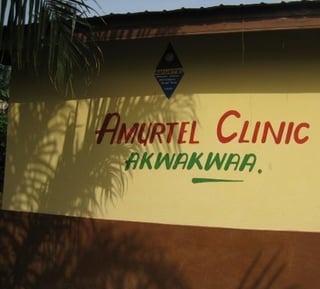
Emma_Africa_10_30_2015-707414-edited.jpgOnce this position ended, I wanted to explore another area which I was really passionate about during my degree. I loved parasitology. However, when I enquired about roles in this field, most jobs needed at least 3 months experience working in a developing tropical country. This is why I set up a placement working in a rural health clinic in Ghana. My role involved teaching the nursing students and community health workers some basic biology and first aid. This really allowed me to see the practicalities of working in the field with the most basic equipment and was a tremendously positive experience. I enjoyed helping people and learning to explain concepts in ways that people from another background or culture could understand. I did, however, find it very hard to speak with individuals who had very strong beliefs in traditional medicine, especially when I knew that there was a cheap and easy treatment for a disease that traditional medicine couldn’t fight effectively. I had to learn how to cope with a different climate and culture, and also needed to be resourceful and adapt. By the end of my three months, I fully understood why parasitology roles in the field require experience.
Working in Industry - Microbiology

On returning from Ghana at the beginning of 2010, I explored options for going into parasitology but another major factor held me back; I do not have a second language. During the recession there were many qualified scientists with experience and a second language in Spanish or French, and so they were ideal candidates for these positions.  I had to reassess what I wanted to do and so I applied for a role in Industry. I wanted to get "a real job" and roles in Industry do tend to pay better.
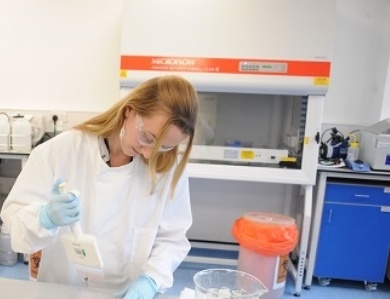
I worked in a Microbiology testing facility, where I tested materials for bacterial contamination. It was a really interesting job at first, everything was very new, and everything was more structured and controlled. I worked from Standard Operating Procedures (SOP’s) and every item I tested was constantly tracked with barcodes and spreadsheets. It was great to be in the lab doing experiments  without the constant fear of failure because I knew the tests worked and would produce a reliable result. This is not to say the role was without issues. Because the primary purpose of the company was to fulfill contracts, my work sometimes felt rushed and the focus always seemed more on getting results than doing good science. Another problem was that the work became monotonous very quickly; as soon as I learned how to do the different tests and became efficient, I then started to become bored because I was not being mentally challenged. For these and other reasons, I started  looking for other career options after 6 months.

Returning to University to Study a Masters of Science

I decided to apply to study a Master of Science (MSc) in Human Molecular Genetics to give me an edge over other graduates during the recession. As each advertised job received many applications, employers were requesting that only scientists with an MSc or higher apply. It was important to weigh the cost to benefit of studying a Masters, because tuition fees had just gone up dramatically and, in England, you could not receive government loans to study a MSc, so I had to take out a personal bank loan. I saved money from my role in Industry and took evening work to help cover the costs. My MSc courses were interesting and luckily genetics is a sector which has been rapidly growing. These factors left me optimistic that I would find a genetics related role soon after finishing my MSc. The masters program was 6 months of classes and 6 months of hands-on lab work for a dissertation. I chose to carry out my dissertation research in a lab in California. I felt then, and still feel now, that it is important to take advantage of the fact that science is a global language that allows you to work anywhere and build a network around the world. The research project was hard; I was researching the epidemiology of breast cancer and I loved the practical aspects of testing samples in the lab, but I really struggled with the large scale data analysis, as this is increasingly reliant on programming skills which are not my strong point.

Working in Industry - Virology

On completing my MSc, I again had to look at what type of work I would like to do. I had taken advanced virology classes in California and enjoyed them, so I applied for a role at a commercial virology testing company. This particular company carries out clinical trials of drugs and treatments for external companies. It was really exciting to work in a larger commercial company; the pay was good and there was a variety of work. The work was very scheduled and it was really nice to have my day planned out. This allowed for a better work-life balance compared to working in research. My previous experience working in Industry was really valuable; I had received all the training and experience relating to good manufacturing practice (GMP) and good lab practice (GLP) (important buzzwords in industry) as well as skills in industry positions.
Emma_Lab_10_30_2015-983302-edited.jpgThere were, however, some downsides to working in a large commercial company. In my particular situation, communication between departments was sometimes difficult and the solution attempted was more meetings, but this simply seemed to create more bureaucracy. As with any large company (both for-profit and non-profit) you can also get a lot of office politics (many individuals trying to divert more resources towards their projects and away from other individuals projects, this can cause conflicts and favoritism, as well as affect morale and cause gossip). These kinds of problems can, of course, be solved with good management practices, but can sometimes go unnoticed at large organizations. Another downside to large commercial companies which are reliant on contracts with clients is that, when those contracts fall through or are cancelled, then redundancies can be made within the company; new staff hired in anticipation of the contract suddenly have less work to do than was anticipated and there can be a glut of individuals with similar skill sets. This is not to say that all commercial companies are like this, as most have a more stable funding situation and level of work than research or academia, and so most positions in industry are more stable than this. However, I would advise you to be wary of companies which are rapidly expanding, as this might not be sustainable. After working at this company for several years, I was ready for a change.
Working Abroad - Research in Australia

I then travelled abroad to work at the University of Queensland in Australia, this was a perfect opportunity to work in a genetics lab. As a UK citizen, I was entitled to a Work-Travel VISA, which means I can gain employment for up to 6 months in Australia or another country of the Commonwealth. Another reason why I chose Australia was because it is an English speaking country with a strong economy and plenty of jobs in science at world renowned institutes. The lab at the University of Queensland required a scientist for a 6 month project to validate some genomic changes, so this arrangement was ideal for everyone.  The cutting edge science in this lab was amazing. I loved working on developing an easy to use diagnostic tool for the detection and diagnosis of different types of pancreatic cancer and highlighting which treatment would produce the best outcome for a specific combination of genetic mutations. This is a particular challenge in pancreatic cancer where one drug does not work for all patients, leading to very high mortality. I really loved the fact that my work had a real impact  people’s lives and would improve their treatment outcomes. I would say that the only downside of modern genetics from the perspective of somebody trying to get hands-on lab experience is that the technology is so advanced that most of the procedures in the lab are done with robots. Young scientists going into this field don’t really get to do a lot of lab work but instead really need to be comfortable with programming.

Working for a Scientific Not For Profit

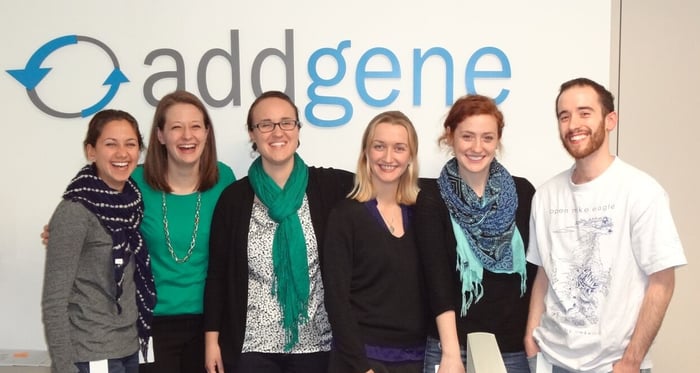
On returning to the UK, I checked out the job postings from recruitment agencies and noticed a position available at a small science non-profit doing customer service (recruitment agencies often don’t tell you what company a job is with until just before the interview). This wasn’t exactly my idea of a dream job, but I knew that I enjoy helping people and decided to compromise and applied anyway. I later found out the job was with Addgene. I had used plasmids from this company before and recognised the logo, but didn’t know much else. During the interviews, I asked if I could contribute more towards the scientific aspects of the company as well and use my other skills and interests. I was so glad when my future supervisors were keen for me to become involved with many different aspects of the company and gave me the freedom to design new projects and grow in the role. I understand this is a fairly unique situation, because it is a small and dynamic company and so it has the flexibility of a ‘start-up’. I was surprised how well I fit in with the company and that my ideas and changes were welcomed, which is a benefit over larger companies which have more bureaucracy and cannot be as adaptive.


I was also surprised to learn that I enjoy the customer service side of my job. Because of my background in genetics, I can help scientists problem solve experiments over the phone or explain how various plasmids work. Most people who call or email me are scientists who are grateful for some help.  I also get the chance to contribute content to the Addgene’s Website and travel to meet scientists, making my job different every day. I love the freedom to design and develop my own projects, but working remotely (Addgene’s main offices are in Cambridge MA, while I’m based in London) does bring its own challenges. I’ve had to become skilled with technology like Skype in order to have meetings between teams. This communication is vital because otherwise I’d lose touch with my colleagues and have misunderstandings.  Working long distance, you need to be very self-motivated, because you need to work independently most of the time and plan your own work schedule.  I really love my highly varied role, it has allowed me to travel and to share my passion for science, but I also understand my job would not suit everyone.
My career path may seem quite unusual but it has allowed me to try out working in many different sectors and to discover for myself what potential job opportunities are actually like day-to-day. It is all too easy to see ‘real’ science as wearing a lab coat and working at the bench, but the reality is a little different. Industry and academic jobs do exist, but working in industry just wasn't for me, and as has been highlighted recently it has become more difficult to attain a permanent position in academia. It is therefore important for young scientists and PhD students to also explore a range of alternative careers outside of acidemia to have the best chance of finding their perfect job.  

This blogpost was originally features on Addgene's website, the original can be viewed here: https://blog.addgene.org/finding-your-perfect-job-after-university
Share: